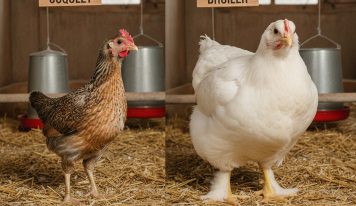
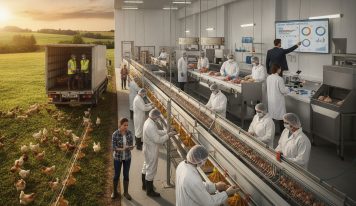
The poultry supply chain, especially that which produces chickens for meat (broilers) or laying hens on a large scale, is a highly structured and hierarchical process that starts from animals with a very specific genetic heritage, the so-called “Grand Parents”.
Here’s how it works, step by step.
Grand Parents (GGP – Great-grandparents)
They are the pinnacle of the genetic pyramid. They are a very limited number of animals (a few thousand females worldwide, the exclusive property of a few global genetic companies).
These animals are the result of years of research and advanced genetic selection. They are selected for specific and desirable traits, such as growth rate, feed conversion efficiency, disease resistance and meat quality or the ability to lay a large number of eggs.
Grand Parents farms are extremely controlled and biosecure to prevent the spread of diseases and ensure genetic purity. Each animal is individually identified and its parentage is carefully recorded.
Parents (GP – Parents)
The eggs laid by the Grand Parents are incubated and give birth to the Parents.
Parents are the generation following the Grand Parents and are raised to produce eggs that will give rise to chickens intended for consumption (broilers or layers).
They are always under strict health and nutritional control to maximize their reproductive capacity.
Broiler chicks or egg-laying chicks

The eggs produced by the Parents are incubated in large industrial hatcheries.
From these eggs hatch day-old chicks, which are the “commercial generation”.
For broilers: these chicks are sent to fattening farms. Here they are raised on a specific diet and in controlled conditions to reach slaughter weight in a very short time (often between 35 and 50 days, depending on the breed and the market).
For laying hens: These chicks (females only, males are discarded) are raised until they reach laying age (about 18-20 weeks), after which they are transferred to laying hen farms for the production of eggs for consumption.
Breeding and Feed Mill
Modern farms are often vertically integrated, meaning that a single company or group of companies controls several stages of the supply chain, from feed production to breeding, slaughter and distribution.
Feed mills produce specific diets for each stage of the animals’ lives, optimizing growth and health.
Slaughter and Processing (for broiler chicken)
Once they reach the desired weight and age, the broilers are transported to the slaughterhouses.
This is where the slaughtering and processing of meat (cutting, packaging) for the various markets takes place (whole chicken, specific cuts, processed products such as sausages, cutlets, etc.).
Distribution and Consumption
Poultry products (meat or eggs) are distributed to retail outlets (supermarkets, butchers, restaurants) and finally reach the final consumer.
Key points to consider
Genetic selection – It is the heart of the supply chain. Genetic companies invest enormous resources in research and development of increasingly high-performance lines. This has led to a significant improvement in production efficiency over the years.
Vertical Integration – Much of the poultry supply chain operates with a vertical integration model, where different phases are closely coordinated and often managed by the same company or by interconnected groups. This allows for greater control over quality, biosecurity and efficiency.
Biosecurity – Given the large concentrations of animals, biosecurity (measures to prevent the introduction and spread of disease) is essential at all stages, but especially on Grand Parent and Parent farms.
Traceability – Modern legislation requires high traceability, allowing the origin of the product to be traced at every stage of the supply chain.
In short, the poultry supply chain is a shining example of how genetics, industrial organization and technology come together to provide food products at scale with controlled quality and safety.