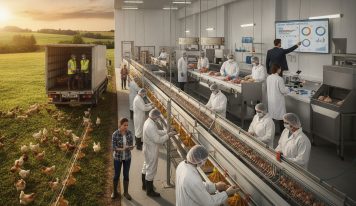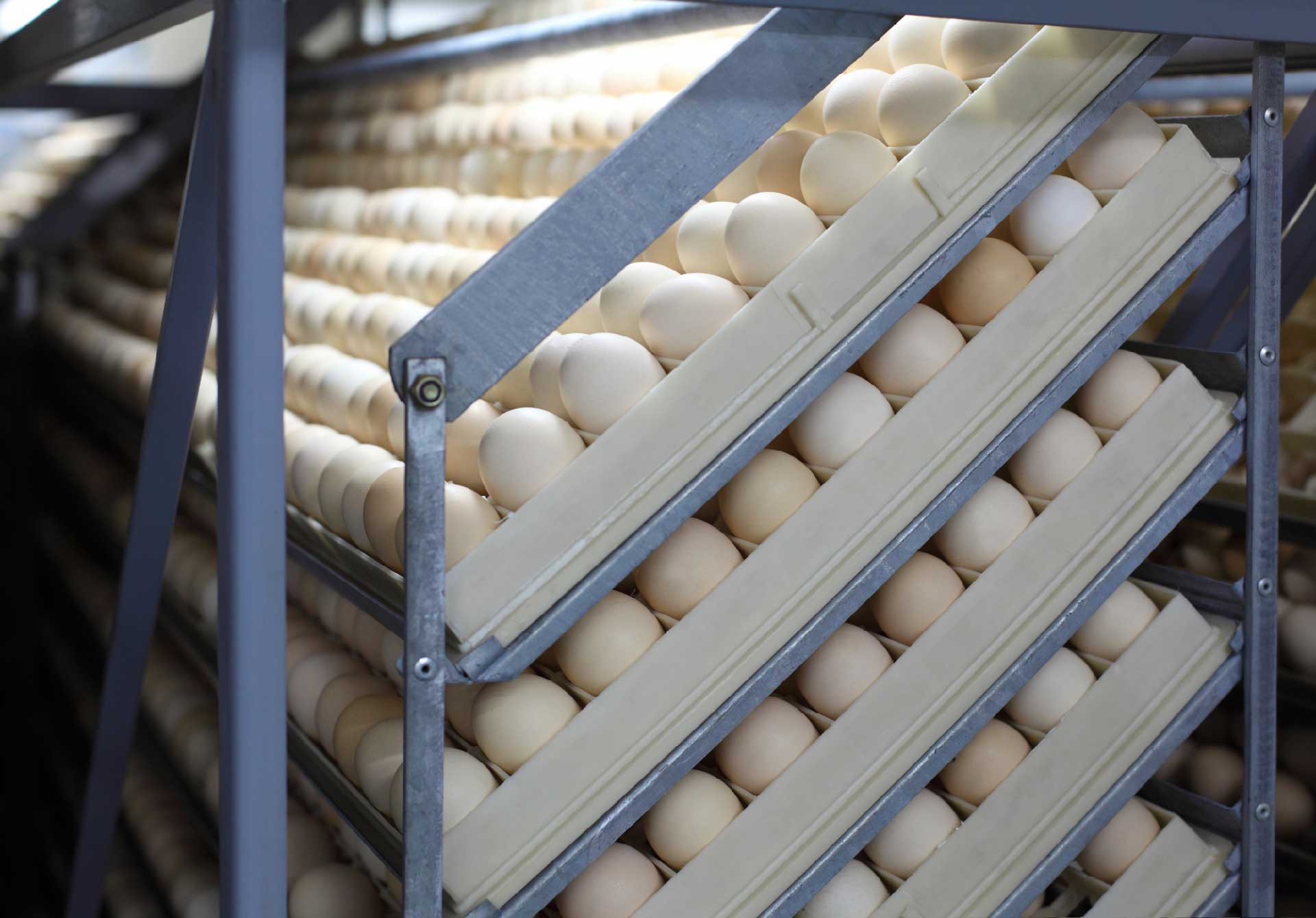
In public discourse, poultry hatcheries are often described as “industrial” and impersonal. In reality, they represent one of the most technologically advanced segments of the entire supply chain, where biology, animal welfare, and sustainability are constantly intertwined. Understanding how they work helps not only dispel many misunderstandings, but also recognize the essential role they play in ensuring food safety, quality, and animal health.
Below we provide a simple, yet comprehensive, overview of the main types of hatcheries used worldwide for layers and broilers , with a focus on Europe and leading poultry production countries.
Single-stage incubators
They are now the most widespread standard in technology-intensive countries, such as Europe, the United States and parts of Asia.
How they work
- The eggs all enter the “machine” together and go through the entire incubation cycle as a single batch.
- Temperature, humidity, and ventilation are calibrated based on the embryonic age, ensuring an extremely stable and controlled environment.
- Modern systems use sensors, algorithms, and dynamic ventilation to adapt the microclimate in real time.
Advantages
- Improved chick uniformity.
- Greater biosecurity (less movements).
- Better energy efficiency.
- Possibility of applying advanced wellness protocols ( pre -heating, reduction of thermal stress, carbon dioxide management).
Where they are most widespread: Western Europe, North America, Brazil, South Africa, Middle East.
Overview
- Global trend: Most new large-capacity hatcheries (over 100,000 eggs/week) are now designed as single-stage , while a significant share of global volumes still hatch in multi-stage , especially in emerging countries. https://lohmann-breeders.com/single-stage-and-multi-stage-incubation-systems/
- Western Europe: clear prevalence of single-stage in large integrated flocks ( broilers and layers), with residual multi-stage in older facilities.
- Latin America: A strong transition is underway. Almost all new industrial projects (Brazil in the lead) are single-stage, while many older plants remain multi-stage. https://www.petersime.com/expertise/multi-stage-versus-single-stage-incubation-put-to-the-test-in-a-commercial-broiler-hatchery
- Asia and Africa: Here, the picture is mixed. The most industrialized centers (e.g., Thailand, Saudi Arabia) invest in single-stage projects, while in many areas, multi-stage projects remain widespread for reasons of cost and management simplicity.
A concrete example in Brazil ( broiler )
A study conducted in a large Brazilian group (LAR Cooperative) compared, for 1.5 years, the same flow of eggs in single-stage and multi-stage incubation https://www.petersime.com/expertise/multi-stage-versus-single-stage-incubation-put-to-the-test-in-a-commercial-broiler-hatchery The results:
- over 5 million eggs tested;
- improved hatchability and growth performance in single-stage batches ;
- confirms that, given the same genetics and management, single-stage allows for finer control of the microclimate and more uniform results.
From this it can be deduced that when comparing the same animals under the same conditions, more modern systems produce more uniform and vital chicks, with benefits for their well-being as well.
Multi-stage incubators
These are the ones still present in many areas of the world, especially where energy costs are high or where egg management technology is in transition.
How they work
- The machines simultaneously contain eggs at different stages of development.
- The heat produced by the more advanced embryos helps warm the younger ones, reducing energy consumption.
Advantages
- Lower operating costs.
- Greater robustness and ease of management.
- Ideal for contexts with less advanced infrastructures.
Where they are most widespread: South Asia, Africa, Latin America, Eastern Europe.
Integrated incubation and hatching systems (in-ovo and early feeding )
This is one of the most significant innovations of recent years, very popular in Europe and rapidly growing in the rest of the world.
How they work
- The eggs are incubated and hatched in environments designed to reduce the chick’s stress.
- Some systems allow chicks to access water and food already in the first hours of life (“early feeding”).
Advantages
- Better animal welfare.
- More vital and more uniform chicks.
- Reduction of mortality in the first days.
- Possibility of avoiding the slaughter of male layers thanks to in-ovo sexing systems.
Where they are most widespread: Netherlands, Germany, France, Scandinavia, Canada, Israel.
NB: in-ovo selection technologies allow us to monitor embryonic development without invasive manipulations such as in-ovo sexing which allows us to identify the sex before hatching, avoiding the birth of males in laying hens.
Distribution: Germany, France, Netherlands (in some cases required by law or by large-scale retail trade).
Highly automated and robotic incubators
Increasingly common in large integrated groups.
Characteristics
- Robot for loading/unloading trays.
- Automated disinfection systems.
- Digital traceability of each batch.
- Data analysis to optimize performance and well-being.
Benefits
- Reducing human risk (biosafety).
- Better consistency of results.
- Greater transparency towards customers and authorities.
Decentralized hatcheries or “on-farm hatching”
They represent the most recent trend, especially in Northern Europe.
How they work
- The eggs are transferred to the farm at the end of incubation shortly before hatching.
- The chicks are born directly in the shed, avoiding transport and handling.
Advantages
- Reducing transport stress.
- Immediate start to power.
- Better adaptation to the breeding environment.
Limits
- This is a solution that requires very well-designed structures.
- Not always applicable on a large scale.
We now respond to a short collection of the most widespread criticisms of hatcheries
The most common criticisms concern “industrialization,” “artificiality,” and “animal welfare.” Let’s try to address them in a balanced and, above all, informative manner.
Hatcheries are chick factories: in reality, they are controlled environments that stably reproduce conditions that a brooding hen could not guarantee on a large scale. Thermal and humidity stability reduces stress and mortality.
“Technology dehumanizes the process”: the opposite is true because technology allows us to monitor every stage , prevent suffering, reduce handling, and improve chick health. Operators are trained and often highly specialized. The growth of the automation market (+7% annually) is driven by biosecurity needs , reduction of human error , and continuous monitoring of incubation conditions: https://growthmarketreports.com/report/poultry-hatchery-automation-market and https://dataintelo.com/report/global-hatchery-equipment-market . Automation doesn’t mean taking away attention, but rather ensuring that each egg and each chick receives more stable and controlled conditions than a single operator could provide alone.
“Natural hatching would be more ethical”: Natural hatching is possible, but it’s not sustainable to guarantee biosecurity, uniformity, disease control, and a constant supply of healthy chicks. Modern hatcheries are designed specifically to minimize risks and suffering . In natural systems, it’s much more difficult to control diseases, parasites, temperature, and humidity; modern hatcheries reduce the use of antibiotics throughout the supply chain thanks to improved upstream biosecurity; in some European countries, technology even allows for the avoidance of males in layers (in-ovo sexing), addressing one of the strongest ethical criticisms.
“Chicks are stressed from birth”: innovations as early Feeding , on-farm hatching and in-ovo sexing demonstrate that the industry is investing heavily in reducing stress and improving welfare.
As you might imagine, the sector evolves primarily because it listens. Hatcheries are not simply “industrial plants,” but centers of biological and technological expertise.
Their evolution -from single-batch to in-ovo systems, from automation to on-farm hatching – shows a sector that not only produces, but innovates, listens to society, and invests in animal welfare.
By posting this content on our blog and doing so clearly, we hope it will contribute to a more informed and less ideological debate.
We continue this article with some more technical insights with some repetitions
The global market: numbers that tell the story of the poultry sector’s evolution
- Hatchery automation: estimated value around USD 1.5 billion in 2024 , expected growth of +7% annually until 2033.
- Hatchery equipment (incubators, hatcheries, robotics): approximately USD 4.6 billion in 2023, expected USD 7.8 billion in 2032 (+6.2% annually).
- Key trend: Investments are driven by biosecurity, animal welfare, and reducing human error.
These numbers show a sector that does not “industrialize” to dehumanize, but technologizes to improve health, well-being and sustainability .
Comparison between world areas
Europe
- Clear prevalence of single-stage.
- Very high automation.
- Strong focus on well-being: early feeding , on-farm hatching , in-ovo sexing.
- Layer hatcheries are often separate from broiler hatcheries .
Latin America
- Brazil and Chile at European levels in new plants.
- Many multi-stage still operating in rural areas.
- Focus on efficiency and biosafety rather than ethical issues.
Asia
- China, Thailand and Türkiye have European-level hatcheries.
- In other areas, multi-stage prevails for economic reasons.
Africa
- Multi-stage is very common.
- Rapid growth of new single-stage plants in urban areas and integrated projects.
Single-stage vs. multi-stage: where and how much
Overview
- Global trend: most new large-capacity hatcheries (over 100,000 eggs/week) are now designed as single-stage, while a significant share of global volumes still hatch in multi-stage, especially in emerging countries. https://lohmann-breeders.com/single-stage-and-multi-stage-incubation-systems/
- Western Europe: clear prevalence of single-stage in large integrated flocks ( broilers and layers), with residual multi-stage in older facilities.
- Latin America: a strong transition is underway; almost all new industrial projects (Brazil in the lead) are single-stage, while many older plants remain multi-stage. https://www.petersime.com/expertise/multi-stage-versus-single-stage-incubation-put-to-the-test-in-a-commercial-broiler-hatchery
- Asia and Africa: a mixed picture; the most industrialized centers (e.g., Thailand, Saudi Arabia) invest in single-stage projects, while in many areas, multi-stage projects remain widespread for reasons of cost and management simplicity.
Automation and market size
- Hatchery automation: Global value estimated at USD 1.5 billion in 2024 , with expected growth of approximately +7% annually through 2033. https://growthmarketreports.com/report/poultry-hatchery-automation-market
- Hatchery equipment (incubators, hatcheries, feeding systems, etc.): market valued at approximately USD 4.6 billion in 2023 , expected to reach USD 7.8 billion in 2032 (+6.2% annually). https://dataintelo.com/report/global-hatchery-equipment-market
These numbers not only reflect economic growth, but above all a continuous investment in technologies that improve control, biosecurity, and animal welfare.
Differences between geographical areas ( broilers vs. layers)
Europe
Broiler:
- prevalence of large, highly automated single-stage hatcheries;
- strong diffusion of early systems Feeding and, in some countries (the Netherlands, Germany, France, Scandinavia), on-farm hatching and in-ovo sexing for layers. https://lohmann-breeders.com/single-stage-and-multi-stage-incubation-systems/
Layers:
- hatcheries often separate from broiler ones ;
- increasing adoption of technologies to reduce or eliminate male culling (in-ovo sexing, “no-kill male chicks” projects).
Northern Europe (Netherlands, Germany, Scandinavia)
Here we find the pioneers in:
- on-farm hatching (eggs transferred to the farm at the end of incubation);
- In-ovo sexing for layers, with commercial solutions already operational and supported by large-scale distribution and ethical brands.
Latin America (Brazil, Mexico, Chile)
- broiler production;
- rapid transition to single-stage and advanced automation, but with many multi-stages still in use;
- focus more on efficiency and biosafety than on ethical issues such as in-ovo sexing (which are however beginning to emerge).
Asia
- China, Thailand, Turkey : very advanced centers, with hatcheries comparable to those in Europe;
- other areas with simpler structures, where multi-stage remains interesting due to the lower energy costs.
In summary: in Western and Northern European countries, almost all new broiler and layer hatcheries are based on highly automated single-stage systems, often integrated with early stage solutions. Feeding , on-farm hatching , and in-ovo sexing. In Latin America and parts of Asia, the transition is in full swing: large groups are investing in technologies similar to those in Europe, while many long-established hatcheries continue to operate in multi-stage systems for cost and infrastructure reasons. In Africa and some Asian regions, multi-stage systems remain prevalent, but the growth of the global equipment and automation market -estimated at over $4.6 billion in 2023 and rising rapidly- indicates that modernization is only a matter of time here too.
https://dataintelo.com/report/global-hatchery-equipment-market
https://growthmarketreports.com/report/poultry-hatchery-automation-market
https://lohmann-breeders.com/single-stage-and-multi-stage-incubation-systems/