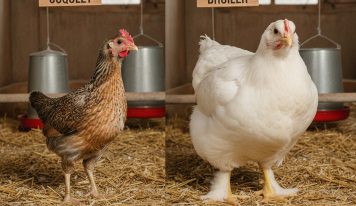
As always, we also put ourselves in the consumers’ shoes to answer the legitimate questions, more or less explicit, that people ask when at the supermarket (for example) they find signs that say “antibiotic-free chicken” while on others they do not find the same wording
Insiders know how to read these claims. But the consumer does not.
In the EU since 2006, the use of antibiotics in animal husbandry has been banned.
However, it should be explained that “prophylactic” or “preventive” use is prohibited. That is, it is not allowed to use antibiotics to prevent diseases that may occur. It should be said that diseases occur more frequently in barnyard animals and generally in those living outdoors, because they are exposed to risks that are prevented on professional farms. Many years ago (but this has not been the case for a long time) it was common practice to use preventive antibiotic therapy to make sure animals did not get sick. Today, on the other hand, the use of antibiotics is only allowed when a situation arises that could put a herd at risk.
But even here it should be explained that professional farms aim to avoid having to resort to the use of an antibiotic to treat an event…not least because when it does happen it would trigger additional procedures and costs that would mortify, even commercially, the farm. In order to avoid pharmacological use, there are now specifications that, by following them, prevent the occurrence of disease. Disciplines that in fact represent a focus on animal welfare because the more care that is taken, the rarer the case for antibiotic use becomes.
Returning for a moment to the signs that are displayed in large retailers indicating that that poultry product is “antibiotic-free” it should be made clear that they are gimmicks for purely commercial purposes. All chickens (whole or portioned) that you find on the market are antibiotic-free. Be they from organic or conventional farms. The only difference may be that that animal has always been healthy (so it did not need to be treated) or that it did need to be treated with an antibiotic (and then subjected to the withdrawal period later to dispose of the drug). In other words, those signs only tend to preference one chicken over another to justify (unduly) a higher cost of sale.
To understand the commercial “game” we are faced with when we encounter signs that say “no antibiotics,” we need only reflect by making a comparison with the human sphere: if you are faced with two people who are healthy at that moment, what difference does it make if one of them in the past has never been sick compared to one who has had to get treatment instead?
Antibiotics are rarely used, but they are just one of the many tools farmers use to keep the chickens on their farm healthy. Professional farms follow biosecurity programs designed by licensed and especially experienced veterinarians. The purpose of these programs is to create a barrier that prevents diseases from entering the farm. However, as with people, animals sometimes get sick, and disease management is a delicate part of animal care that is addressed by animal health experts and veterinarians to determine whether treatment is needed and with what antibiotic. Antibiotics used for animals are not the same as those used for people
Whatever the consumer’s choice of the different types of chicken available in supermarkets, it is important to reassure them that traditional chicken, organic chicken, or chicken raised without antibiotics are healthy, safe, and verified foods and that when they arrive on our tables they never have any trace of antibiotics.
Chickens, like people, can also fall ill even when kept in the best conditions. All animals are recognized as sentient beings (Article 13 of the TFEU, which states that the welfare needs of animals, as sentient beings, must be fully taken into account) and must be treated when they become ill. A veterinarian is a professional who assesses symptoms, makes a diagnosis, and prescribes appropriate treatment for sick animals, including antibiotics where necessary, just as doctors do for people.
Certainly poultry farming continues to grow as the world’s population increases because the demand for safe, affordable and nutritious animal protein is growing, especially in developing economies around the world. The trend toward using poultry products as the main source of protein is in fact steadily increasing globally. As a result, poultry professionals and poultry production managers will most likely be faced with additional regulatory requirements and new consumer demands. The industry, on the other hand, must continue to evolve through innovation, communication, transparency and technology.

Listed below are some of the objections and questions (and their answers) about antibiotics in the poultry sector, raised by activists and those unfamiliar with the industry. You will find repeated explanations, but on these issues some things are best repeated:
Some animal protection groups are trying to have the very idea of using antibiotics on animals removed
This would be a very dangerous choice because antibiotics should instead be available when needed, but to be used with great caution and responsibility. It is a rule that should be applied to both animals and humans and only following diagnosis and prescription by a veterinarian (in animals) or a physician (in humans), to control infections and stop the spread of a disease. It is essential to preserve both the welfare of farm animals and the wholesomeness of the food produced.
Overuse of antibiotics in chickens is said to lower people’s defenses against bacteria
No. The development of bacterial resistance to antibiotics is the same in humans and chickens. In both humans and chickens, it is always the misuse or overuse of antibiotics that leads to the development of bacterial resistance (i.e., when certain types of bacteria become accustomed to a certain type of antibiotic). Transfer of antibiotic resistance genes between humans and chickens can occur only occasionally and in both directions.
Some denigrators of professional poultry farms say that “Farmed chickens have low immunity due to limited genetic makeup.”
These are gratuitous and false claims. The people making these claims certainly do not have the knowledge of animal antibody kits, nor do they know how many animals are tested.
It happens to hear from the vegan world that, according to them, antibiotics are present in intensively raised chicken meat
False. For every veterinary antibiotic in the EU that should be administered (in permitted cases) before slaughter, very strict “withdrawal times” are provided, to give the animal’s body time to dispose of the drugs taken and, above all, to ensure food safety, because food products of animal origin -by law- cannot contain antibiotic residues.
We hear that more antibiotics are used on intensive farms for chickens than for humans
In the EU, antibiotics are used only when necessary and in any case, when the need arises, they are not prescribed randomly, to avoid the risk of administering ineffective drugs, but only following the indications of the antibiogram performed on the germ that caused the disease. In addition, they are used in an appropriate proportion to the size of the animal. It should be noted that this is a precaution that does not occur in antibiotic therapy in people, who instead take the same formulas for everyone, sometimes in excessive or even unnecessary doses.
We hear that people can get sick from eating chickens that have developed antibiotic resistance
False. There are many, unfortunately, who believe that antibiotic-resistant bacteria are transferred from animals to humans, but for this to happen a very complex and very rare sequence of events would have to occur. On the contrary, antibiotic resistance of bacteria in humans occurs mainly as a result of direct intake of these drugs to treat diseases. For this reason, their use should be limited to strictly necessary cases under the supervision of the treating physician.
You will hear that chickens are treated with antibiotics because they get sick because of the lifestyle they lead
When they get sick, chickens are treated with antibiotics, just like our children or puppies. However, the use of antibiotics on poultry farms in Western countries, including Italy, is very strictly regulated. Action is taken only when strictly necessary, that is, only if the chickens become seriously ill. The antibiotic is not available to the farmer, but only to the veterinarian who takes responsibility for the treatment and its supervision. All antibiotic treatments are registered by health authorities. Farms with higher than average antibiotic consumption are subject to inspection. Once cured, it is mandatory for poultry farmers to comply with the so-called “withdrawal time,” which is the number of days it takes for animals to dispose of the drug before it is released to the market. In addition, antibiotics are used according to a much more refined and targeted procedure than antibiotics for human use, because for chickens, through an “antibiogram,” the specific antibiotic is chosen for the type of bacteria present and only in the necessary dose. Antibiotics used for humans, on the other hand, are in equal doses for all, broad spectrum and without certainty that the spectrum includes that particular bacterium active at that time.
They say intensive farms use antibiotics as a preventive measure to compensate for poor hygiene on farms
Using antibiotics preventively has been banned since 2006. However, even chickens, like people, even if kept in the best conditions can get sick. All animals are recognized as sentient beings (Article 13 of the TFEU, which states that the welfare needs of animals, as sentient beings, must be fully taken into account) and must be treated when they become ill. A veterinarian is a professional who assesses symptoms, makes a diagnosis, and prescribes appropriate treatment for sick animals, including antibiotics where necessary, just as doctors do for people.
They say antibiotics are given in excessive amounts to chickens because the people in charge are not competent
Antibiotics in chickens can only be used after examination, diagnosis and prescription by a veterinary doctor. All veterinarians working in the poultry industry are experienced and qualified to assess the health condition of animals under their responsibility, diagnose and prescribe the necessary treatment, just as doctors do for people. In the poultry sector, however, thanks to improved prevention strategies, vaccination plans, and the adoption of husbandry techniques that are increasingly respectful of the health and welfare of farm animals, the use of antibiotics to intervene on diseases has been progressively reduced over the past 10 years. In many European countries, the rate of reduction, compared with the previous decade, now exceeds 90 percent.
We attach a link to an interesting document with Focus on the production of Antibiotic Free broilers taken from the online bookstore of one of the world’s leading poultry companies in the supply of breeding chicks: