Those who follow us know that we often return to this topic.
If we do this, it’s because we increasingly hear and see reports and articles pointing the finger at “industrial” poultry farms, which are certainly large, but which are also the best system available in our overpopulated society (soon there will be around 8 billion of us on this planet) for accessing accessible proteins—that is, low-cost, always available, health-safe, and of controlled quality.
In fact, when we ask ourselves whether the chickens and hens we eat should be “free” rather than “locked up” in industrial farms (which are then professionally organised farms), we forget to consider that:
- Structured poultry farms (intensive and protected) are the result of the effort to produce food for the world’s population and exist with the specific function of allowing humanity to have healthy, controlled, economical and easily available food sources;
- protected poultry farms guarantee the animals a much higher quality of life than they would experience in the wild;
- These farms exist only because the products they generate are in high demand, obviously for food purposes.
What is the best condition for a chicken?
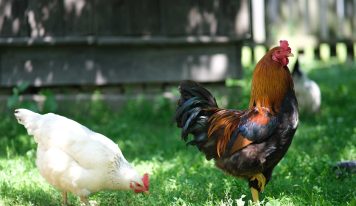
Free-range chickens, where they exist, are in rural environments (small farms) or kept in the backyards of farmers’ families. In these cases, the animals face difficult “natural” conditions and potential suffering.
Animals raised by the poultry industry, on the other hand, benefit from shelter, better housing conditions, guaranteed feed, healthcare, and protection from predators… which are better conditions than their counterparts in backyards, but strictly related to the purpose for which they are raised.
A free-range chicken, precisely because it is exposed to the elements, disease, and predators, is not as certain of being able to live longer than a broiler chicken destined for slaughter on a specific date, which enjoys a short lifespan but a better quality thanks to human intervention.
A planned death isn’t necessarily bad for them, and in fact, a painless, early death might even be seen as a positive compared to the potential future suffering of old age or illness. However, these are considerations that tend to compare chickens to people and equate human expectations with the supposed expectations of a chicken.
It is also important to note that any agricultural production intended for our food (even just the cultivation of vegetables) always involves casualties and habitat destruction: the casualties are those due to the dismemberment of rabbits, mice, birds that nest on the ground, amphibians and reptiles, insects, worms, snails… caused by human-driven agricultural machinery used to cultivate the land.
Even plant-based foods can therefore have “harmful” consequences: quinoa, soy, palm oil, cashews, avocados, and greenhouse crops cause environmental damage and a loss of wildlife that could even worsen if vegan numbers increase… a problem that would also occur if vegan orientations were to induce even partial changes in the diets of the omnivorous population.
The best solution is always a balanced diet, which extremists reject out of hand, without realizing the consequences of listening to them.
Even “speciesism” is shortsighted
“Non-speciesist” activists oppose the killing of all animals for human consumption and do not accept any welfare standard as a sufficient condition. They objectively only want the total elimination of animal farming, because they consider it immoral exploitation, regardless of the efforts made by farmers to create very high animal welfare conditions.
There are various forms of activism, including those who would like to extend a vegan project to the entire society, as well as those who more openly and sensibly demand welfare standards for farmed animals, using media pressure and dialogue with cross-sector stakeholders.
The various forms of activism include both those who would like to apply a vegan project to the entire society, and those who, more openly and sensibly, demand welfare standards for farmed animals, using the method of media pressure and dialogue with stakeholders from all parties.
The ethical considerations of those who promote hostility toward animal farming are, however, mostly personal considerations that may reflect the narrow interests or dubious motivations of those who proclaim them. These are often instrumental and highly suggestive arguments, but they lack scientific support and are often even paradoxical.
We are certain that vegan concerns are “genuine.” However, it cannot be ignored that they reflect the beliefs and attitudes of activists who make observations about their own social context, formulating highly questionable and, above all, unverifiable hypotheses about the needs and desires of livestock. It should also be noted that vegans describe their struggle as universal, although they do not have widespread support for it, effectively limited to the middle classes of Western cities, in religious circles characterized by strict attitudes, especially among those who consider foods of animal origin impure.
These forms of extremism then take root at a strictly economic and commercial level, which exploits their intensity and the very forms of communication, developing commercial activities whose sole objective is to meet consumer demand. But this is an issue that also opens up considerations that are far from related to animal welfare and proper nutrition.
NB: regarding speciesism, check its meaning and various implications on Wikipedia.