What can global crises teach us about food, health, and security?
We live in a time when international tensions — from the Strait of Hormuz to the Red Sea routes, from energy instability to new health challenges — seem distant from everyday life.
Yet when it comes to food, health, and security, everything is connected.
The poultry sector is one of the clearest examples of this interdependence.
Not because it is fragile, but because it is fast, global, and highly responsive.
This is why chicken is, in many ways, a sentinel of the modern world.
Logistics crises reshape feed costs
When a maritime route is disrupted, even briefly, the effects reach farms quickly: cereals, soy, energy, fertilizers.
Chicken production shows how essential global logistics are for food security.
Vaccines and biosafety: poultry as a laboratory of prevention
While public debate focuses on human vaccines, poultry has decades of experience with mass vaccination, epidemiological monitoring, and biosafety protocols.
It embodies a simple, universal principle: prevention works.
A global community speaking the same language
From the United States to India, from Europe to South America, poultry professionals use similar procedures, technologies, and standards.
It is a global network built on science, data, and cooperation.
Fake news and perception: the crisis of information
Every global crisis brings misinformation.
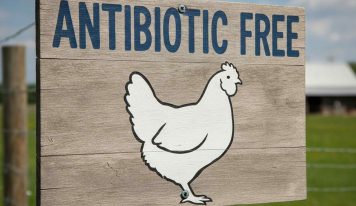
In poultry, we see it clearly: myths about antibiotics, unfounded fears about vaccines, confusion between animal welfare and ideology.
Transparency is not just communication — it is security.
Chicken as an indicator of the future
Chicken is the world’s most consumed animal protein. This makes it the first to reflect geopolitical tensions, market fluctuations, health crises, and climate change.
Observing poultry means observing how the world is changing.
In short, chicken isn’t just chicken.
It is a lens through which we can understand how food, health, and security form a single ecosystem. And why, today more than ever, we need clear, fact-based information.