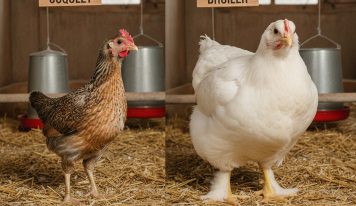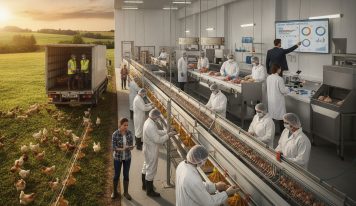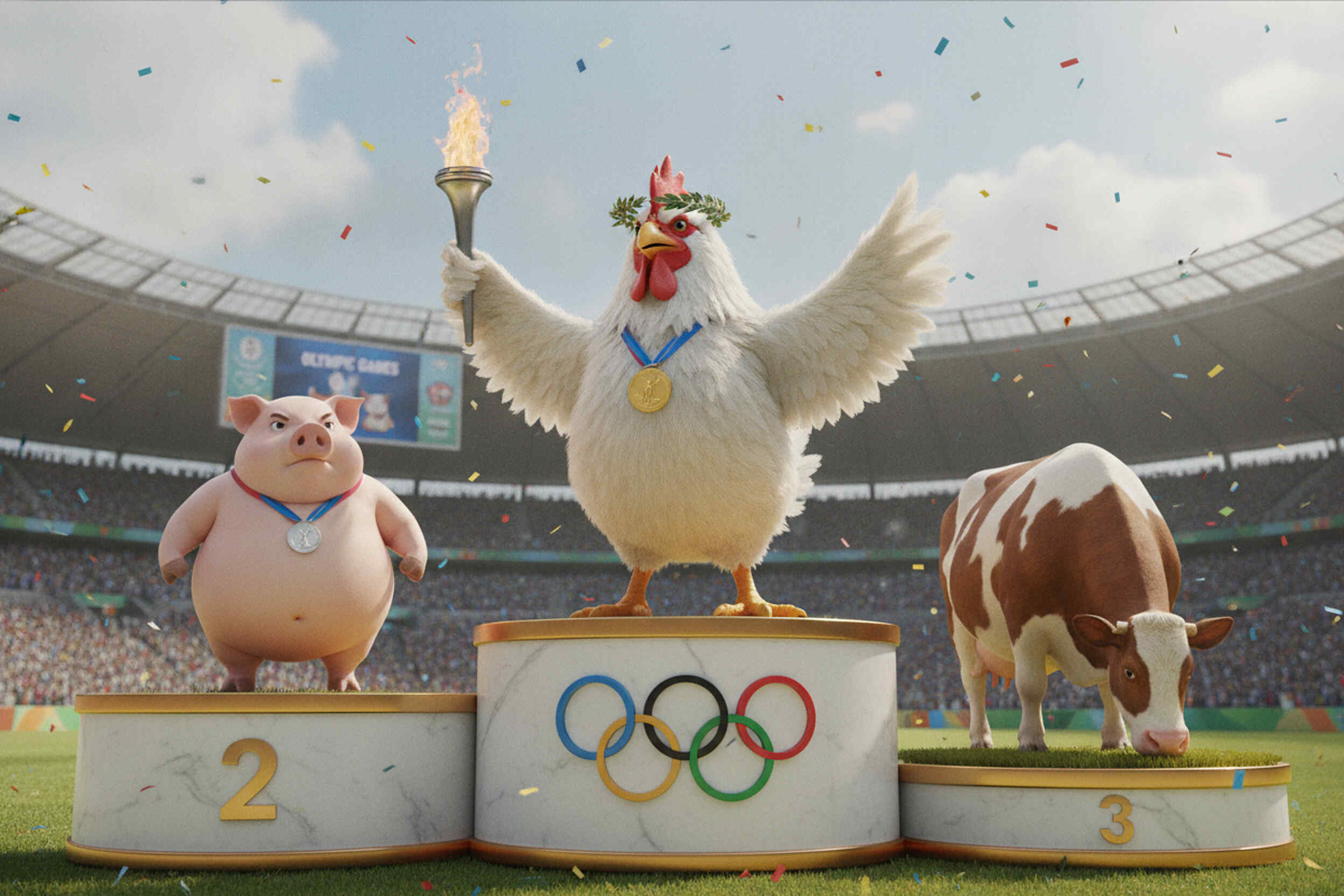
Il settore avicolo italiano è considerato un modello di eccellenza e all’avanguardia in Europa per la sicurezza alimentare, l’autosufficienza produttiva e l’efficienza della filiera, nonostante le complesse sfide che deve affrontare, come la gestione sanitaria e l’impatto ambientale.
Punti di forza e record
- Autosufficienza: l’Italia è l’unico grande Paese nel settore zootecnico ad essere completamente autosufficiente (copre oltre il 105% del proprio fabbisogno di carne avicola).
- Riduzione degli antibiotici: il settore ha guidato una virtuosa transizione ecologica e sanitaria, riducendo l’uso di antibiotici nell’allevamento di oltre l’80% in pochi anni.
- La filiera integrata: il modello italiano controlla ogni singola fase, dall’alimentazione del bestiame alla trasformazione, garantendo completa tracciabilità ed elevati standard igienici.
- Benessere animale e tecnologia: gli allevamenti avicoli operano su terreni in ambienti altamente controllati, dotati di sistemi digitali per il monitoraggio del clima e del benessere degli animali.
Le questioni critiche
- Influenza aviaria: come nel resto d’Europa, la pressione delle epidemie di influenza aviaria rappresenta una minaccia costante, gestita attraverso rigidi protocolli di biosicurezza.
- L’impatto dell’allevamento intensivo: indagini e associazioni ambientaliste sollevano spesso preoccupazioni in merito all’elevata densità degli allevamenti, alla gestione delle emissioni (ammoniaca) e alla sostenibilità territoriale.
Focus sulle normative europee in materia di benessere degli animali.
Le normative europee sul benessere degli animali sono tra le più severe al mondo , basate sul principio che gli animali sono esseri senzienti.
Le leggi vigenti stabiliscono standard minimi di protezione negli allevamenti, durante il trasporto e al momento della macellazione. Il settore avicolo è regolamentato da direttive specifiche in continua evoluzione per soddisfare le crescenti esigenze di sostenibilità ed etica.
Il quadro normativo vigente per il settore avicolo
- Per le galline ovaiole (la direttiva 1999/74/CE) ha vietato, a partire dal 2012, le vecchie “gabbie a batteria” non modificate , consentendo solo gabbie arricchite (con nido, posatoio e lettiera per razzolare) o sistemi alternativi di allevamento a terra, all’aperto e biologici.
- La direttiva 2007/43/CE relativa ai polli da carne stabilisce limiti massimi di densità di allevamento (espressi in kg/m²) e definisce requisiti rigorosi per l’illuminazione, la ventilazione e il monitoraggio quotidiano della salute degli animali.
- Le norme orizzontali (Direttiva 98/58/CE) stabiliscono le regole minime generali di protezione per tutti gli animali da allevamento, compresa la libertà dal dolore, dalla fame e dallo stress.
(NB: Council Directive 98/58/EC (20 July 1998) is the European Union’s “horizontal” framework law on animal welfare . It establishes the general minimum requirements for the protection of all animals bred or kept for production, food or agricultural purposes, applying in Italy through Legislative Decree no. 146/2001 whose fundamental principles are based on the five freedoms international animal welfare standards , imposing structural and management obligations on breeders for each livestock species:
- Nutrition: Healthy, adequate food provided at regular intervals.
- Water: constant availability of fresh, clean water.
- Environment: suitable physical spaces, dry shelters and good microclimate conditions (air, temperature and lighting).
- Health checks: daily inspections of animals to prevent and promptly treat diseases or injuries.
- Freedom of movement: enough space to allow for normal natural behaviors (rest, movement and socialization).
The scope of application and the rules
- Horizontal nature: it applies generally to all livestock species (cattle, pigs, sheep, goats, poultry), acting as a common basis where there are no specific “vertical” directives.
- Staff: Employees must possess adequate skills, knowledge and professional ability.
- Records: The breeder must record every medical treatment and the number of dead animals found at each inspection.
Towards the Review of Legislation
The European Union has initiated a comprehensive regulatory review based on the recent EU Livestock Strategy . The cornerstones of this upcoming development, guided by scientific advice from the European Food Safety Authority (EFSA) , include:
- Phasing out cages: The European Commission is planning a proposal to revise welfare standards for laying hens and broilers to facilitate a full transition to cage -free systems.
- Stop mutilation: Strict guidance against preventive debeaking (cutting the beaks) of chicks, a practice used to avoid cannibalism.
- Genetic Control: Reducing reliance on excessively fast-growing breeds ( fast-growing broilers ), which cause muscle and skeletal problems in chickens.
Regarding debeaking : the EFSA (European Food Safety Authority) does not limit itself to recommending the abolition of debeaking (considered a painful mutilation even if the most advanced systems have eliminated this risk https://nutriamocidibuonsenso.it/riduzione-del-becco-dei-pulcini-di-cosa-si-tratta/ and https://moreaboutchicken.com/beak-reduction-of-chicks-what-is-it/ ), but proposes to eradicate the causes of cannibalism by acting drastically on the structural and management conditions of farms .
According to EFSA’s scientific opinions , feather pecking and cannibalism are not inevitable innate behaviors, but rather pathological responses caused by intense stress, boredom, and overcrowding . Consequently, EFSA’s recommended strategy to address this problem is based on five fundamental pillars:
- Total transition to cage-free systems
- EFSA recommends the complete elimination of cages (including enriched ones).
- Animals should be housed in floor systems, aviaries, or outdoor systems ( free-range and organic) to encourage freedom of movement.
- Drastic reduction in stocking density
- Reducing the number of birds per square meter reduces competition for resources (food, water and perches).
- Lower density eliminates social frustration and allows weaker individuals to avoid aggressive group members.
- Continuous environmental enrichment
- Suitable litter : Provide a friable litter (e.g., straw or sand) that allows foraging and scratching. If hens express their natural pecking instinct on the ground to search for food, they won’t direct it toward their fellow hens.
- Raised structures : The inclusion of platforms and perches that provide refuge areas and reduce the visual stimulus of pecking by other hens.
- Light management and “Dark Brooders ” systems
- Diffused and dimmed light : Excessive light intensity is one of the main triggers of aggression. EFSA recommends strict control of artificial light.
- Use of dark brooders : for chicks in the early stages of life, these structures simulate the body of the hen, encouraging rest in the dark and avoiding sensory overexposure that generates anxiety and early pica.
- Genetic selection and targeted nutrition
- Docile genetic lines : encouraging the selection of hen strains with a natural predisposition to less aggressive behavior.
- High-fiber diet : Feeds formulated with high levels of fiber and fed in a way that extends ingestion time, keeping animals occupied for longer.
The market response: the European Chicken Commitment (ECC)
In parallel with the laws, the European Chicken Commitment , a voluntary standard promoted by coalitions of NGOs, is gaining ground. Hundreds of large food companies and supermarket chains in Europe are committing to adopting more stringent criteria than the legal minimum, such as the exclusive use of slower-growing breeds, lower stocking density, and improved natural lighting.
Complying with stringent animal welfare regulations requires a complex balance between technological investment and economic efficiency. The digitalization of livestock farms (Smart Farming) is the primary tool for ensuring compliance with the scientific standards required by the European Union, but it entails significant transition costs that impact the supply chain.
Digital technologies for poultry welfare
State-of-the-art farms use Precision Livestock Farming (PLF) systems to monitor animals in real time without generating stress.
- Environmental sensors and IoT constantly monitor ammonia, carbon dioxide, humidity, and temperature levels. Automatic ventilation control prevents respiratory diseases in chickens.
- Cameras and artificial intelligence analyze the group’s behavior. They detect early signs of stress, potential gait problems (due to rapid growth), or anomalies in food distribution.
- Microphones and audio analysis detect the frequency and type of bird calls. Special algorithms identify acoustic “distress signals” related to health or ventilation problems.
- Automatic weighing systems: suspended weighing plates record the weight of chickens as they step onto them spontaneously. This eliminates the need for manual capture and weighing, which is a source of significant stress.
costs for companies
The transition to higher standards, such as those required by the European Chicken Commitment (ECC) or future EU regulations, has a significant economic impact on the cost of meat production.
- Lower stocking density: Reducing the kilograms of meat per square meter means producing fewer animals in the same shed. To maintain the same production, the farmer must build new facilities, increasing fixed costs.
- Slow-growing breeds: Slow-growing chickens take approximately 30-40% longer to reach slaughter weight. This translates into higher overall feed and water consumption (lower feed conversion rate) and increased total emissions per bird.
- Structural investments: the installation of windows for natural light, environmental enrichments (straw bales, perches) and PLF technologies require high initial capital investments ( CapEx ), often sustainable only thanks to RDP (Rural Development Plan) funds.
- Consumer price: industry studies estimate that the total switch to slow-growing breeds and reduced densities could increase the production costs of chicken meat by between 20% and 35%, with an inevitable impact on the final price for the consumer.
Economic impact of poultry meat compared to other livestock sectors (e.g. pork or beef)
The poultry supply chain has a clearly different economic impact compared to the pork and beef supply chains, characterised by greater feed conversion efficiency, rapid cash cycles and constantly growing domestic consumption .
The Italian beef livestock sector generates a total production value of over €12.6 billion. Within this sector, the three sectors face very different structural and financial dynamics.
Economic and structural comparison between supply chains
Conversion rate and IT resources
Feed efficiency varies dramatically between different supply chains.
The poultry supply chain is the most efficient of all, featuring a very high conversion rate: it requires just 1.6 – 1.8 kg of feed to produce 1 kg of meat, consuming very few resources.
On the contrary, the pork supply chain shows an average efficiency with an index of around 3, requiring three times more feed consumption than that of chicken.
The situation is even more critical for the beef supply chain , where the conversion rate is low (between 7 and 10 kg of feed per kg of meat), leading to a consumption of resources up to ten times higher than that of the poultry sector.
Capital return cycle
Payback periods reflect the biological cycles of animals.
The poultry supply chain offers a rapid turnaround cycle, between 40 and 60 days, thanks to high production volumes and a very fast rotation.
The pork supply chain is at average levels, requiring 6 to 9 months due to the long times required for raising heavy pigs.
The bovine supply chain, on the other hand, has a slow return cycle, which varies between 12 and 24 months, resulting in a high level of immobilization of the invested capital.
National self-sufficiency rate
The country’s level of productive independence varies significantly depending on the sector.
The poultry sector guarantees total independence from foreign countries, with a self-sufficiency rate exceeding 105%.
On the contrary, the other two supply chains suffer from structural deficiencies:
- the pork supply chain covers only 60-65% of the demand, forcing a strong import of fresh raw materials
- the beef supply chain stops at 40-45%, highlighting a structural dependence on the import of foreign cattle.
Domestic consumption trends
Consumer purchasing habits in 2025 paint a contrasting picture. The poultry sector leads the market with strong growth in domestic consumption, equal to +6.1%. The pork sector also shows positive momentum, recording an increase of +3.1%. The beef sector , however, bucks the trend , experiencing a 1% contraction in consumption.
Analysis of individual sectors
Poultry Supply Chain: The Engine of Livestock Growth
Poultry is the most popular meat in Italy, driven by its excellent quality-price ratio. According to data from the ISMEA Observatory , household spending on white meat has shown double-digit growth (+11.5%) thanks to a net increase in stable volumes in the shopping cart. The vertical integration of the supply chain protects farmers from extreme fluctuations in feed prices.
Pork Supply Chain: oriented towards exports and PDO products
The pork sector has a solid but unbalanced turnover. Domestic production is focused on the protected (PDO) hams circuit, generating a record export value exceeding €2.5 billion. The critical economic impact on this supply chain is represented by international health barriers (e.g., African Swine Fever) and the need to import fresh meat from abroad to cover domestic consumption of fresh cuts .
Beef Supply Chain: High Physical Costs and Compressed Margins
Beef is experiencing the greatest economic pressure. Its long biological cycle imposes high housing and feed costs that consumers struggle to absorb. Consequently, despite sharp increases in average retail prices (+8.7%), household purchases are declining (-1%). From a macroeconomic perspective, Italy imports calves for fattening (stalls, primarily from France), reducing the added value retained domestically.
We provide some links to organizations and associations to allow you to observe their approaches to the topics we have addressed:
https://www.vitellonebianco.it
https://www.confagricoltura.it
Here is a complete overview of the structural difference
of the Vertical and Horizontal Standards and on the Italian application.
Horizontal Norms vs. Vertical Norms
European Union law on animal welfare is structured on two regulatory levels: framework (horizontal) legislation and specific (vertical) legislation.
The regulatory system for animal welfare: Horizontal and Vertical
Farm animal welfare legislation is structured on two complementary levels, defined by horizontal rules and vertical rules.
- Horizontal rules (based on Directive 98/58/EC) set general minimum standards for all farm animals.
- Vertical standards, on the other hand, include specific directives and regulations. They introduce stringent technical requirements for a single species or a specific stage in the animal’s life.
Areas of Application and Legal Prevalence
In practical terms, horizontal regulations act as a veritable “safety net” to protect species without a dedicated law, such as adult cattle, sheep, goats, and rabbits. Conversely, when dealing with explicitly regulated species or situations, the vertical regulation always prevails over the horizontal regulation.
Differences in content and parameters
The nature of the contents also varies profoundly between the two levels:
- The horizontal guidelines define general ethical principles, such as freedom of movement, proper ventilation, access to food and water, and mandatory medical checks.
- Vertical criteria impose mathematical measurements and rigorous parameters. Examples include the minimum square centimeters required for each garment, the maximum number of hours allowed for a trip, or the intensity of light measured in lux.
Main European Vertical Standards
The “vertical” regulations are divided by farmed species and specific phases of the supply chain:
- Calves: Directive 2008/119/EC (standards for individual and collective pens).
- Pigs: Directive 2008/120/EC (ban on dark housing, requirements for sows and weaning).
- Laying hens: Directive 1999/74/EC (measures for enriched cages and alternative systems).
- Broiler chickens: Directive 2007/43/EC (stocking density limits per square metre).
- Cross-cutting phases: Regulation (EC) 1/2005 (protection during transport) and Regulation (EC) 1099/2009 (protection during killing/slaughter).
Italian implementation of Legislative Decree no. 146/2001
The Italian Parliament transposed the horizontal directive through Legislative Decree No. 146 of 26 March 2001. This text represents the cornerstone of veterinary controls on national farms.
Practical obligations for breeders
The decree lists in detail in the Annex the mandatory actions for the animal keeper:
- Daily inspections: In technological or intensive farms, animals must be checked at least once a day ; sick or injured animals must be isolated and treated immediately.
- Lighting: Stables must have lighting (fixed or mobile) suitable to allow a complete inspection at all times.
- Company Register: It is mandatory to maintain a register certified by the Local Health Authority (ASL) to record veterinary therapeutic treatments and the mortality rate found at each inspection. The data must be kept for at least 3 years .
- Freedom of movement: The animal cannot be tied or restrained if this causes unnecessary suffering. It must be able to lie down, turn around, and groom itself without difficulty.
- Sistemi automatici: i sistemi di ventilazione o di alimentazione elettrica automatizzati devono essere controllati quotidianamente ed essere dotati di allarmi e sistemi di backup di emergenza in caso di interruzione di corrente.
Quali sanzioni sono previste?
La mancata osservanza delle disposizioni del Decreto Legislativo 146/2001 comporta pesanti sanzioni amministrative (che possono superare i 6.000 euro per violazione). Qualora le condizioni di detenzione costituiscano gravi e ingiustificate sofferenze, il reato viene perseguito ai sensi dell’articolo 544-ter del Codice Penale (Maltrattamento degli Animali) .
Forniamo alcuni link a organizzazioni e associazioni per permettervi di osservare i loro approcci alle tematiche che abbiamo trattato:
https://www.giurisprudenzapenale.com