Why don’t most people know about the innovation and animal welfare work behind it?
The poultry farming sector represents one of the most dynamic and innovative supply chains in the Italian agri-food sector, and numerous companies in Europe operate with similar commitment and responsibility.
Yet, paradoxically, it is also one of the most misunderstood areas of human nutrition. The collective imagination often circulates biased, distorted, or completely false information that ignores the daily work of farmers, veterinarians, and researchers to ensure the well-being of chickens, hens, and chicks, and the quality of their eggs.
In recent years, the poultry industry has invested heavily in scientific research, advanced technologies, and management protocols that prioritize animal health and comfort.
There’s talk, but it should be said that not enough, of environmental monitoring systems that automatically regulate temperature, ventilation, and lighting; of diets designed by nutritionists to promote balanced animal growth; of biosecurity programs that drastically reduce the use of antibiotics; of genetic studies aimed not at “forcing,” as is often said, but at selecting more robust and disease-resistant lines.
All this work, however, often remains invisible to the public. People don’t have direct access to the farms, they don’t know the complexity of the procedures, and they can’t imagine how much professionalism and science goes into a seemingly simple product like an egg or a chicken breast. People are exposed only to commercial advertising, which tells little or nothing, and to fake news spread across various media outlets, without direct contact with those who work in the sector.
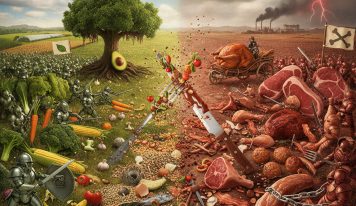
It is into this information vacuum that fake news easily inserts itself: sensationalized stories, decontextualized images, generalizations that completely ignore the progress made in the sector.
The result is a paradox: the more the supply chain invests in innovation and animal welfare, the more it risks being judged based on narratives that do not reflect reality.
This is why it’s crucial to communicate better, open the doors of farms, and transparently report what happens every day. Not to defend ourselves, but to restore dignity to a sector that has made responsibility and sustainability its cornerstones.
For us at www.nutriamocidibuonsenso.it and www.moreaboutchicken.com, countering fake news doesn’t mean denying the existence of critical issues—every sector has them—but recognizing that the Italian poultry industry (as in much of Europe) is today among the most controlled, advanced, and committed to ensuring high standards of animal welfare.
And it’s important to know that behind every egg, chicken, hen… there’s a world of expertise, research, and innovation that deserves to be known.
In this context, the dissemination of partial or unverified information can lead to misunderstandings and the spread of misleading content. For this reason, it is essential to promote transparent and evidence-based communication, capable of enhancing the daily commitment of industry professionals and effectively combating fake news.
For this reason, without anyone asking us, we have committed to covering an area of communication, inexplicably little “practiced” by the poultry sector as a whole, which should instead be addressed with determination.
Behind every egg that arrives on our table lies a world few people know about. A world of people who rise at dawn, of veterinarians who monitor every detail, of technologies that—we’ve said it before, but it bears repeating—regulate water, light, feed, air, and temperature to ensure the animals grow as peacefully as possible. It’s a silent, often invisible, work, but driven by a profound sense of responsibility.
Yet, precisely because this commitment is invisible, it’s easy for some to believe images or stories that don’t represent reality. Fake news makes a lot of noise, while the daily care is kept quiet. But it’s there, present every day: in research to improve chick welfare, in constant monitoring, in innovations that make farms increasingly sustainable, as very strict rules are applied to ensure their health.
Discussing all this isn’t just a necessity: it’s an act of respect for those who work with dedication and for the animals themselves. Because the truth deserves to be known, and the value of this supply chain deserves to be recognized.
We can list some of the main technological and management innovations aimed at improving animal welfare and production sustainability implemented in recent years:
- Environmental monitoring systems based on IoT sensors for automatic regulation of temperature, ventilation, and lighting.
- Advanced biosecurity programs, which have contributed to a significant reduction in antibiotic use.
- Scientifically formulated foods, calibrated to ensure correct nutritional intake and promote balanced growth.
- Non-invasive genetic selection, oriented towards robustness and resistance to pathologies.
- Animal welfare protocols comply with European regulations and often exceed minimum requirements.
Despite this continued progress, public perception is often influenced by unverified or decontextualized content, which fails to reflect the current level of innovation in the sector. This is also why strengthening scientific and institutional communication is essential to counter the spread of fake news and enhance the industry’s commitment.
In the absence of enforcement action, many people continue to imagine poultry farming differently than it actually is. We reiterate that the problem lies in the fact that all this work goes unseen. And when something is unknown, it’s easy to believe fake news.