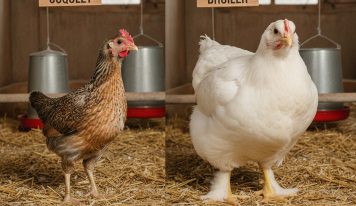
Since 1965, the environmental impact of chicken farming has decreased by over 50% worldwide. This is despite significantly increased production.
At the same time, the health and well-being of chickens has also improved, despite what many claim to the contrary.
What’s said is one thing. What happens is another.
It all depends on the quality of the information and therefore the sources it comes from…
Because correct information, when it arrives (because unfortunately it doesn’t arrive as and where it should), would be able to resolve many inherent issues regarding, for example, the reputation of the sector and its future fate… which is no small thing.
For several years now, I have been independently conducting, first out of curiosity and then out of professional principle, an in-depth study to verify the reliability of news spread by associations and activists who criticize protected poultry farms.
When, from my initial mini-investigation of what was being circulated in various media, I glimpsed “strong signs” of fake news (as a fake is usually defined), I found it necessary and appropriate not only to delve deeper, but to disseminate the results of my investigations in a format accessible to the public who, as food consumers, make choices based on the information they receive and closely related to their ability to interpret the signals they receive.
With https://moreaboutchicken.com/ and https://nutriamocidibuonsenso.it/ I observe the poultry sector and those who criticize it thanks also to the availability of the many people in the sector who work or have worked there, each in prestigious and above all authoritative professional roles.
Through these two platforms, I promote these issues, to address poultry farming’s commitment to producing meat and eggs with different motivations.
In general, those who criticize the poultry sector tend to act like a brick wall, essentially rejecting scientifically based comparisons and in-depth analyses, demonstrating a fundamentally ideological approach.
I’ve found the approach of those working in the sector to be different, generally open, even though they’re not yet trained/accustomed to communicating their valuable content in the “right” way. I believe this is due to the habit of viewing criticism as mere flashes in the pan that quickly die down.
This is a “curable” myopia which, however, is neglected and risks getting worse.
The poultry industry as a whole continues to speak only within itself, without seriously considering the relevance of what is happening, which not only concerns it but is also its responsibility. Conferences, congresses, documents, and manuals abound, but they remain for the benefit of those involved in the supply chain… except for the consumer.
Anti-poultry farming activists consistently craft and disseminate objectively well-crafted information, presented and disseminated despite its untruthfulness. These visions and arguments appear plausible despite being false or based solely on emotional, non-scientific considerations.
These criticisms effectively generate small earthquakes that gradually undermine the reputation of the sector, which in reality (like any productive activity) depends only on one type of customer: the end consumer who, not coincidentally, is considered the preferred target for anti-farming organizations to send denigrating messages to.
In fact, the entire poultry supply chain depends on the consumer, which is highly complex and, as a whole, seems to struggle to understand that the real master of the overall situation is precisely those who buy meat and eggs at the supermarket.
In short, the various components of the poultry supply chain, each distracted by the objective of bearing the weight of supply and demand, suffer the limitation of not knowing how to monitor the seismograph and of underestimating the consequences of some popular assumptions such as:
- “Silence implies consent.”
- “If they don’t say anything to defend themselves from attacks by animal rights organizations, it means they have something to hide.”
- “Who knows what’s behind it”

All legitimate concerns that the industry fails to anticipate and consider, hiding behind the belief that it does an excellent job and is attentive to the need to be a source of healthy, controlled, and accessible nutrition.
Unfortunately, the reality is that no news from the poultry sector regarding the quality of its work reaches the people who buy chicken in large-scale retail outlets… who receive only the terrifying news fabricated by anti-farming activists, who have a powerful demolition power over the objectively banal and superficial commercials produced and broadcast by the poultry industry.
This is clearly a conflict biased in favor of the activists who, little by little, have recently (since February 2024) even produced and distributed a film/documentary, which was also presented in Brussels, and then in cinemas, to the discredit of the entire meat supply chain.
By failing to react or even take action, the poultry industry also underestimates the number of consumers who could purchase poultry products but don’t, or who stop doing so because they’re influenced by activists’ fake news. The numbers the industry ” satisfies ” are, in fact, only those who buy, not those who don’t.
This objectively limited view of the industry has recently been confirmed at recent global meetings, where the sector appears to be focusing on what Generation Z will eat in 10 years. This is a legitimate observation, but it confirms a model designed, on the one hand, to encourage operators to make who knows what strategic choices (all of which need to be considered), but which, on the other, fails to consider a fundamental point: Generation Z today and those to come in 10 years, as always, will base their diets on the information they can access… which, for now, is limited to anti-farming activists, who are also well-funded by lobbies with interests linked to other industries.
My anti-fake blogs, on the other hand, are followed by several thousand people around the world. They are tools capable of supporting the sector in protecting the reputation of the entire supply chain, which operates in a serious and professional manner, as a response to balancing and rebuilding the reputation of the industry and the entire supply chain.
Sustainability in the poultry world: videos that demonstrate it
But what should and shouldn’t communication in the poultry sector be like?
- Companies should invest less in artificial advertising and ineffective journalistic services prepared at the table or by relying on actors chosen on the basis of their notoriety and sympathy…
- The information provided should simply illustrate all the care taken by serious breeders (who are the majority) whose interest is to ensure the development of healthy animals…
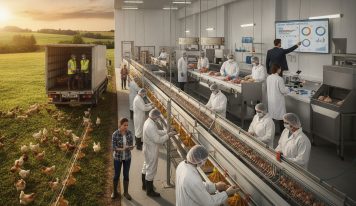
- The narrative should be transparent in describing the poultry supply chain, from the egg to the chicken breast in the tray, and show what serious poultry farming consists of… and above all its social function of providing healthy and widely accessible proteins.
By following these simple rules of fairness (which should be part of marketing), the alarmism fomented by environmental and animal rights organizations, which are among the primary causes of the poultry sector’s loss of credibility, would cease. This loss certainly also corresponds to economic losses, which are precisely what—aside from any ethical considerations—should make the sector sensitive.
Unfortunately, the sector seems unaware of this widespread loss and is content to record an increase in sales, which, put like that, might seem positive to those who look at the day-to-day numbers… but the risk, not so remote for those observing the sector from a lateral perspective, is that a chain reaction of incidents could occur that could be “easily exploited and exploited by the sector’s detractors who would know how to use them to accelerate the demonization of the sector” .
These incidents, using a metaphor, could be compared to seismic events: reputational crises are in fact earthquakes for everyone, whether they are people or companies.
Earthquakes can only be withstood if their victims have built their businesses as earthquake-proof as possible.
Otherwise, a reputational earthquake can bring down even the largest company.
Especially because, often, earthquakes that manifest as reputational crises are also amplified by the media.
It seems like people, all of us, buy products. In reality, products are purchased
based on intangible, yet highly influential, assets that are always linked to the product— certainly irrationally, but inevitably—such as trust, reputation, brand loyalty, knowledge, and thousands of other variables that are formed and changed over the course of the company’s and the customer’s lifespan, in relation to their daily lives. It’s called positioning.
When everything is going well, no one thinks about the good performance of production and consumption.
black swan can arrive , an unexpected event that can generate an earthquake.
If it was foreseeable, the company should have planned how to deal with it, but a good crisis prevention plan (earthquake) should also foresee unlikely but possible events.
Considering a good performance as your comfort zone risks generating even very large losses.
Focusing on business without considering what happens during the creation of your business is a risky choice, perhaps made to bring home some extra margin but which could cause you to lose millions tomorrow morning .
In Italy and Europe, it happens that those who have real and well-argued content to convey decide not to talk about themselves (or if they do, they do it very badly) or even “avoid being found” except by advertising budget hunters…
These incomprehensible choices create fertile ground for those who intend to sow – in the minds of “non-vegetarian consumers” and those sensitive to doubts about their diet – the idea that their food is wrong as well as a source of torment for animals and the cause of environmental disasters.
All this despite the fact that innovation in the poultry sector is, in fact, constantly aimed at ensuring the well-being of farmed animals and developing continuous research to significantly reduce the use of water, agricultural land, electricity, natural gas and other precious resources.
My approach to helping the sector is to seek out or create and then disseminate content that would otherwise be absent or difficult for consumers to access.
Unable to find quality documentation and videos in Italy with comprehensive, clear and understandable descriptions to document the reality, I then extended my research overseas .
I did so knowing that farming techniques, with a few exceptions and differences often related only to the climate and logistics associated with the territory, are now practically identical everywhere.
And it is in America (sigh!) that I found what Italy and Europe lack in terms of information.
In America, in fact, the path is followed of transparent, accurate, complete and easily understandable publications even for a non-expert audience… with the result that those who “train” as haters ( who are everywhere) against poultry farming find very little to brandish their anathemas.
Their disinformation tools appear to be nipped in the bud, their battles take root only among those who have decided a priori to feed only on “vegetables” and expect others to do the same.
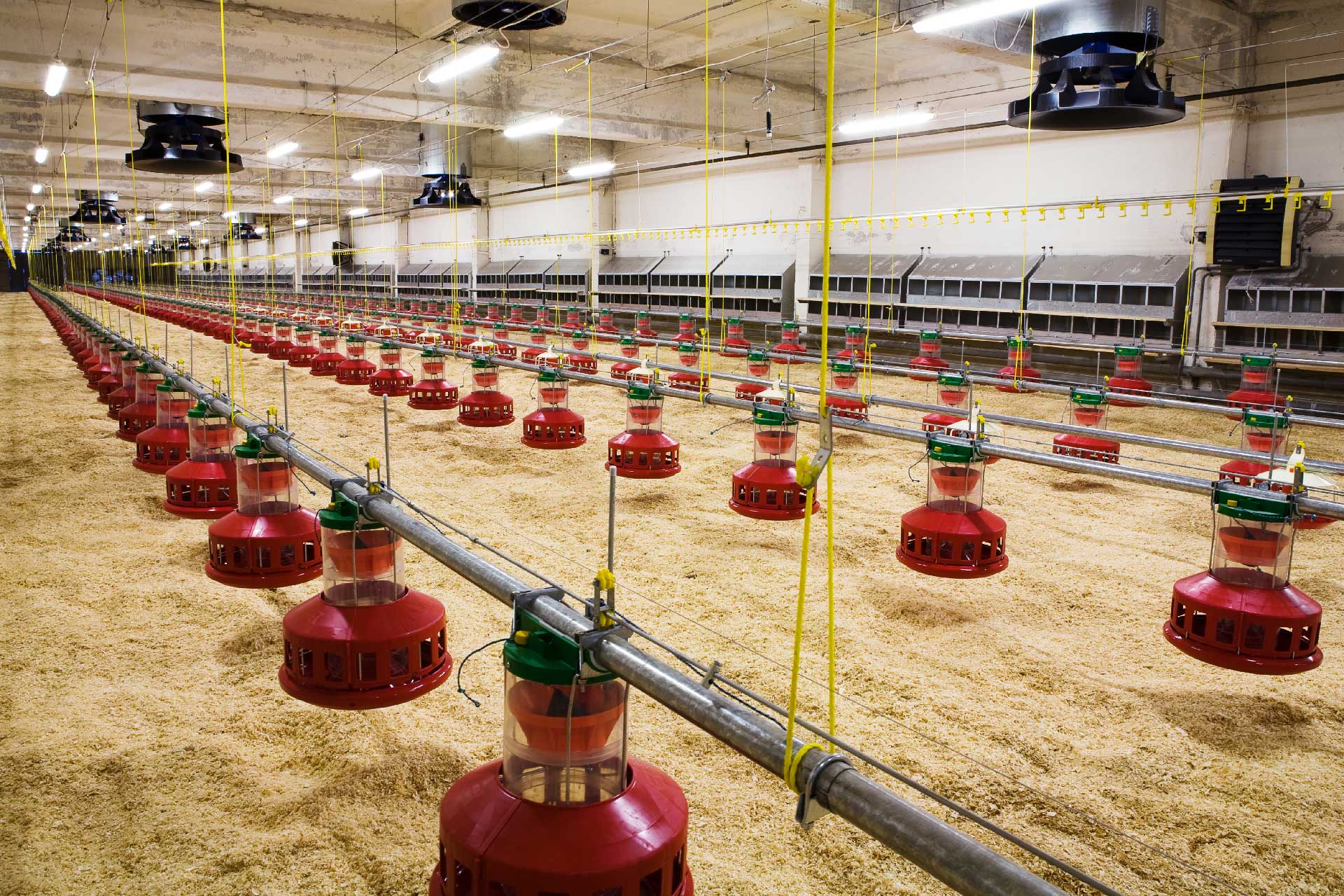
I found quality videos, some even created using 360° 3D techniques, which I’ve linked below because they illustrate the sustainability and environmental management that companies determine using innovative technologies and sustainable agricultural practices, now essential for managing a modern livestock farm.
Among the solutions illustrated in the videos, it is worth summarizing some that you can observe in the films:
- Installation of solar panels
- LED lighting, which produces energy savings of 20-30%
- Using poultry waste as fertilizer
- Constant monitoring of ammonia levels in the shed
- Water saving through the “teat” drinking system which provides clean, constantly sanitized water only when stimulated by the animal
- Fans and cooling systems to circulate air and water and generate efficient cooling in the shed
- Preparation of areas to concentrate debris for compost production
- Setting up “green buffers” which absorb runoff and nutrients for the plants placed around the sheds to absorb
And here are links to some of the most interesting videos:
What Sustainability Means for Chicken Farmers Video: https://youtu.be/5H_VGdHqg-s
A 360° virtual tour of a chicken farm: https://youtu.be/POX7uC4AW6o
…and then there remains my invitation to browse this blog.