Among the products produced by running a poultry farm, in addition to eggs and meat, there are also “secondary” products, including one that we could define as crucial for the sustainability of the farms: “poultry manure” , or poultry waste .
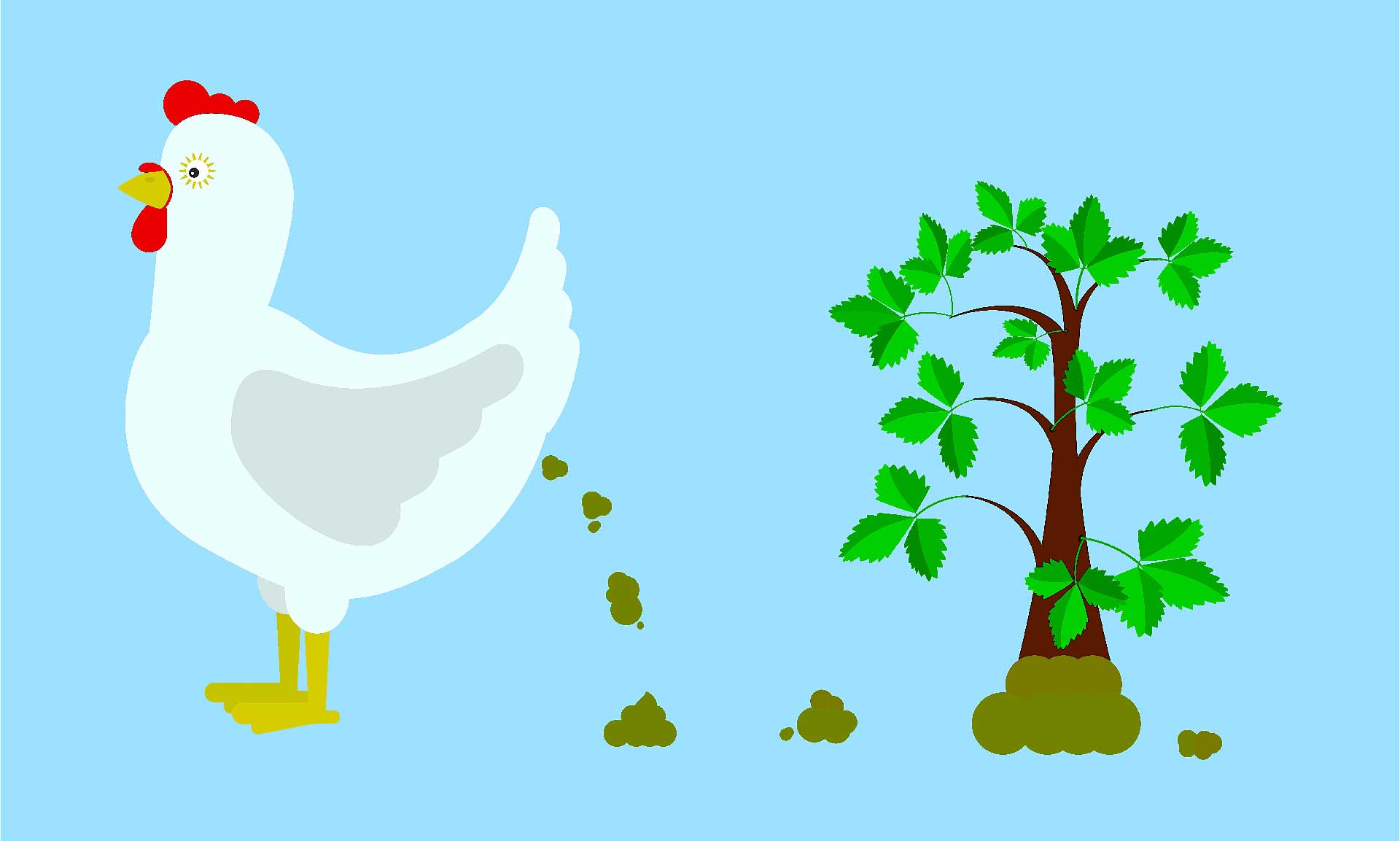
Chicken manure , far from being waste, is actually an invaluable resource that closes the cycle of what happens on a farm by becoming a fertilizer, that is, a concrete and sustainable advantage compared to chemical fertilizers .
What does chicken manure essentially represent?
- It is an organic fertilizer rich in nitrogen, phosphorus and potassium , essential elements for crop growth.
- It allows the nutrients extracted from the soil (via plant feed) to be reintroduced directly into the soil, closing the cycle of agriculture and livestock farming.
- The use of manure reduces dependence on energy-intensive synthetic chemical fertilizers and improves soil health, acting as a little-discussed form of Environmental Responsibility .
The role of poultry manure in the poultry sector is therefore an added value for a food supply chain that intends to be integrated and responsible.
However, it’s important to address the topic of poultry manure, considering its acidity, pH adjustment, and potential health risks. To do so, a comprehensive and responsible approach is essential to address and mitigate potential risks.
I therefore focused on the concerns of a careful consumer.
Pollina: from “waste” to resource, risk management, and circularity
The use of poultry manure (which we could also call “poultry manure”) is a cornerstone of the Circular Economy , as it completes/integrates the nutrient cycle. However, its management requires expertise to mitigate two critical factors:
- its potential acidity/alkalinity power
- risks associated with pathogens .
Soil correction and optimization (PH and Ammonia)
There may indeed be legitimate concerns about the acidity or potency of chicken manure, although the most relevant issue is essentially linked to its richness in nutrients, particularly nitrogen, which must be managed by diluting its “potential potency”.
Let’s try to address these aspects
High Nitrogen and Alkaline Power
manure has a very high nitrogen content (in the form of uric acid), which rapidly converts to ammonia in the environment. Ammonia, when applied to the soil in large quantities and uncontrolled, can temporarily increase the soil pH (i.e., make it more alkaline) and damage plants.
Management: composting and maturation
To mitigate this power and make it an effective and safe fertilizer, chicken manure is not applied fresh, but rather composted or matured . This process, which may include mixing with “carbon-bearing” material (such as straw or sawdust), allows:
- Nutrient stabilization – Nitrogen is converted from unstable ammonia to stable organic forms, reducing volatilization losses.
- Volume reduction – Composting significantly reduces the volume and weight of the material.
Health risks from pathogens and bacterial migration
Health management is the most critical point, especially in the context of intensive farms that generate large volumes.
The risk of pathogens
Chicken manure is a natural habitat for microorganisms of health concern, including Salmonella and Escherichia coli (E. coli). The migration of these pathogens into the environment or the food supply chain is a legitimate priority concern.
The solution comes from Thermalization
The controlled composting process (also known as thermalization ) is the main form of mitigation. During this process, the high temperatures reached within the decomposing mass ( 55°C – 65°C ) act as a thermal sanitization treatment .
Bacterial Killing: These temperatures are sufficient to destroy the vast majority of pathogenic bacteria and weed seeds, making the final fertilizer safe for agricultural use.
Migration control
To prevent migration (which can occur, for example, through rainwater or runoff), mature manure must be stored in covered, waterproofed areas, away from waterways. Responsible waste management requires that the use and distribution of organic fertilizer be monitored based on the soil’s absorption capacity (the agronomic requirement ).
Circular Responsibility
The use of chicken manure is the perfect example of how high production efficiency (generation of large quantities) must be accompanied by high Management Responsibility .
Successfully closing the cycle with manure depends not only on its nutritional richness, but also on ensuring that the stabilization (composting) and thermal sanitation processes are rigorously performed. Only in this way can the poultry sector consider ethically transforming a “waste” into a sustainable resource that nourishes the soil in a circular and safe manner.
I would like to add a crucial element that further strengthens the responsible management of poultry manure: the regulation and the concept of nutrient balance .
These details transform chicken manure management from a simple agricultural practice to a traceable ecological responsibility for the farmer.
Chicken manure: between regulations and nutritional balance
Regulations and liability obligations
The role of poultry manure as a resource is not left to the discretion of individual farmers, but is managed by specific regulations, especially in the European Union, which guarantee safe and responsible use:
- The Animal By-Products Regulation (EC Regulation 1069/2009): This regulation classifies manure as a Category 2 by-product and establishes strict treatment requirements. Use as a fertilizer is permitted only after thermalization or composting ( as discussed above), ensuring the destruction of pathogens.
- The Nitrates Directive (91/676/EEC): This directive imposes limits on the amount of organic nitrogen that can be applied to agricultural soil. This is essential to prevent nitrate pollution of groundwater.
By law, farmers must respect the agronomic needs of their fields, that is, apply only the amount of nutrients the crop can actually absorb. This makes wastewater management an exercise in environmental responsibility , not disposal.
Nutrient Balance: Circular Traceability
A responsible farmer doesn’t just produce safe fertilizer; he ensures its traceability and balance:
- Avoiding excess: The high nutrient content of poultry manure is only beneficial when used correctly. Regulations and good agricultural practices require farmers to maintain a nutrient balance (or nutrient mass balance ): this measures nitrogen input (through feed) and nitrogen output (in poultry manure, product, and losses).
- Traceable circularity: the goal is to minimize nitrogen losses into the environment and ensure that the amount of manure applied to land (own or third-party) precisely matches crop needs. This is not just recycling , but measurable ecological responsibility that closes the loop sustainably, respecting nature’s limits.
Poultry manure management is a regulated process, to be maintained and scientifically monitored, which embodies the concept of environmental responsibility. Advanced systems for treating and transforming manure exist, but they are still uncommon and underappreciated… a related topic to be developed in other contexts.
NB: On the topics of “Circular Ecological Responsibility” just described, circularity, and other relevant issues in defining the importance of the poultry sector and the innovations that can be applied for the benefit of all stakeholders in the supply chain (not least the consumer), I have prepared a proprietary, copyrighted document— designed with consumer respect in mind, but dedicated to the sector—which we will discuss soon.
Peter Greppi
– advisor for ethics in communication
-cultural mediator between the poultry sector and consumers
-founder of Scarp de’ tenis